Artificial intelligence: the frontiers of innovation
2 min readInventario

Introduction
Artificial intelligence (AI) has emerged as one of the most disruptive and impactful technologies today. Through its ability to emulate and automate human cognitive processes, AI is revolutionizing various industries and transforming the way we live, work and relate to one another. In this blog, we will explore the different types of artificial intelligence and how each of them has evolved to set off the next wave of innovation.
ANI: Narrow Artificial Intelligence
Narrow artificial intelligence (ANI), also known as weak artificial intelligence, focuses on specific tasks and restricted contexts. It is an expert at learning patterns and performing precise actions within a predefined domain. Notable examples of ANI are movie recommendation systems on streaming platforms and customer service chatbots on websites. Although ANI has proven its worth in solving concrete tasks, its scope is limited and it does not possess the ability to reason beyond its programming.
AGI: Artificial General Intelligence
Artificial general intelligence (AGI), also known as strong artificial intelligence, aspires to replicate general human intelligence. Unlike ANI, AGI is capable of reasoning, learning and solving problems in a way similar to human beings. The goal of AGI is to give machines a holistic understanding of the world and the ability to adapt to a wide range of tasks without the need for specific programming. Although we are still in the early stages of AGI development, its disruptive potential is undeniable and it promises to profoundly transform society.
ASI: Super-Advanced Artificial Intelligence
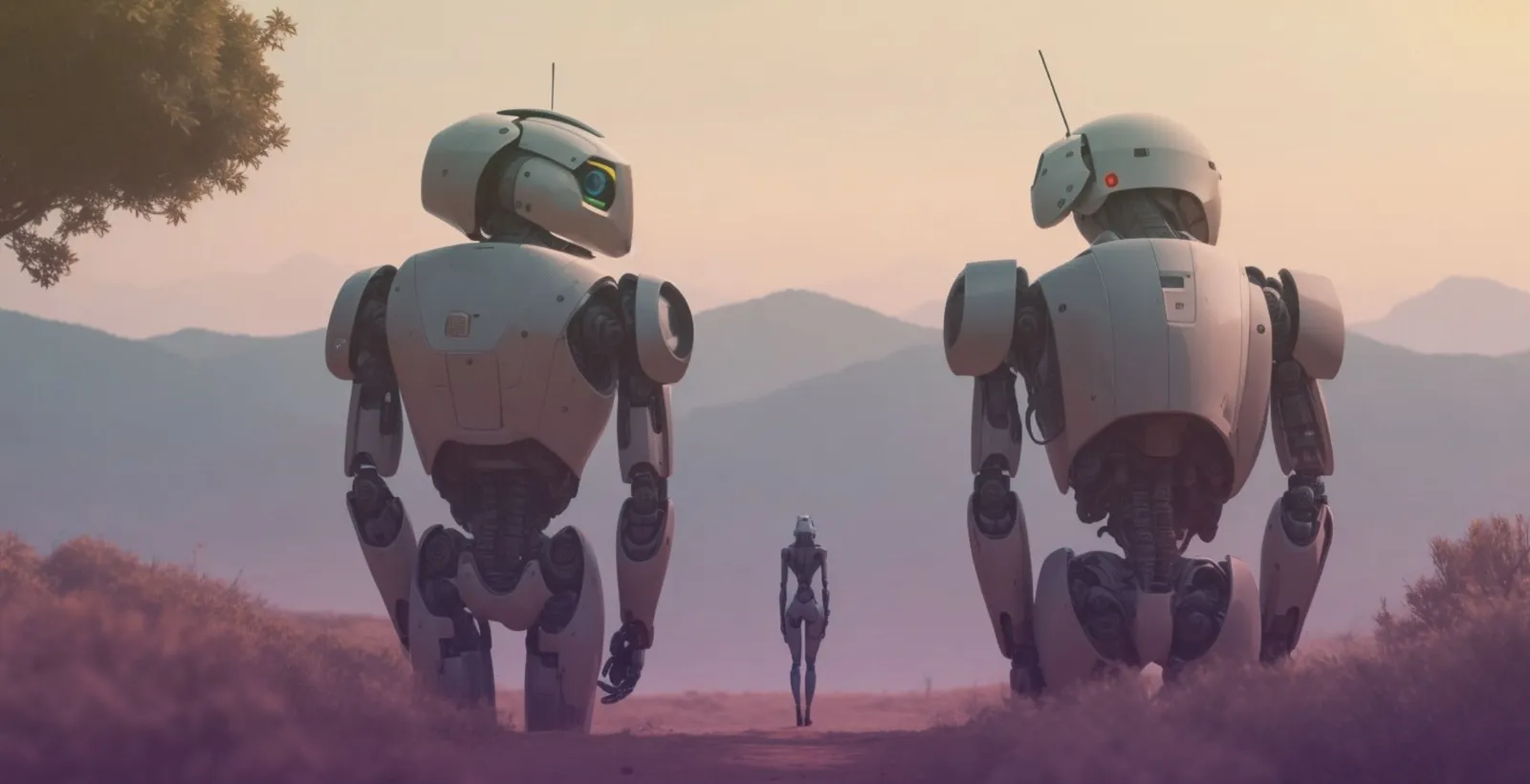
Super-advanced artificial intelligence (ASI), also known as ultra-strong artificial intelligence, represents the highest step in artificial intelligence. ASI seeks the creation of a conscious entity, capable of self-learning and a deep understanding of the world around it. If ASI is ever achieved, it could far surpass the intellectual capabilities of any human being. Although ASI remains a futuristic and challenging prospect, its mere possibility raises ethical and philosophical questions about the role of humanity in a world where intelligence is comparable to ours or even superior.
Conclusion
Artificial intelligence has become a key catalyst for innovation and progress in modern society. Through the evolution of ANI, AGI and the future possibility of ASI, we are witnessing the creation of increasingly intelligent technologies that challenge the frontiers of what is possible. However, with this technological advance, ethical questions and responsibilities also arise to ensure that artificial intelligence is used for the well-being of humanity.
At INVENTARIO, we are committed to the responsible creation of artificial intelligence technologies that improve people’s lives and contribute positively to the future. Join us on this exciting journey toward an increasingly intelligent world full of possibilities.
Innovation has no limits when artificial intelligence is the engine driving change! 🌌🤖
This article is a machine translation of the Spanish original.
- Artificial Intelligence
- Innovation